
The History of Casinos: From Venice to Online Hubs
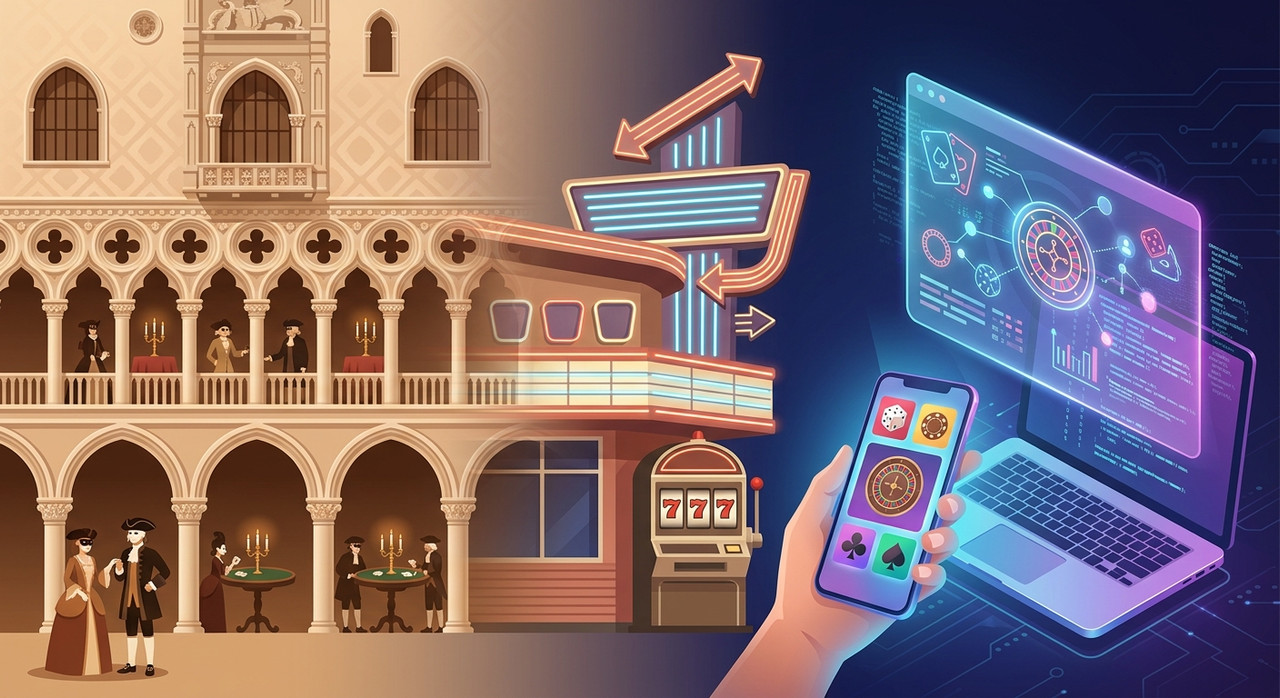
The history of casinos stretches back centuries, long before smartphones and instant online gaming became part of everyday life. Although people have enjoyed games of chance for much longer, the modern casino began to take shape when gambling moved into organised and regulated venues. For readers interested in online gaming resources such as arataki.app, looking at this history helps explain how the industry evolved.
The Birth of the Modern Casino
One of the most important milestones came in Venice in 1638, when the Ridotto was established as a public, state-sanctioned gaming house. It provided a controlled environment for gambling during the Venetian Carnival and became an early model for the modern casino.
The Ridotto offered card and lottery-style games and attracted wealthy visitors who were willing to play for relatively high stakes. Although the venue eventually closed in 1774, the idea of a dedicated gambling house continued to spread across Europe.
From Private Clubs to Casino Resorts
During the following centuries, gambling venues developed alongside tourism and entertainment. European destinations such as Monte Carlo helped establish the casino as part of a broader leisure experience, combining gaming with hotels, restaurants, architecture and cultural attractions.
The concept later became particularly influential in the United States. Nevada legalised casino gambling in 1931, creating the foundations for the development of Las Vegas into one of the world’s most recognisable gaming destinations.
The Rise of Electronic Gaming
From Tables to Machines
Technology gradually changed how people interacted with casino games. Mechanical gaming machines introduced a different style of play, allowing customers to enjoy games without requiring a dealer or table.
Electronic systems later made games faster and more varied. Video slots, electronic table games and computerised casino systems eventually became standard features of many gaming venues.
The Digital Casino Revolution
The arrival of the internet transformed the industry once again. Instead of travelling to a physical casino, players could access digital versions of popular games through a computer and, later, a smartphone.
Online platforms expanded the range of available games and made casino entertainment accessible across different devices. Modern digital casinos can include slots, roulette, blackjack, live dealer games and tournament-style promotions.
Mobile Gaming and Modern Hubs
Smartphones have pushed the industry even further. Mobile-friendly platforms allow users to access casino content from almost anywhere, while improved graphics, live streaming and faster payment technology have made online gaming more interactive.
At the same time, regulation and responsible gambling tools have become increasingly important as digital access has expanded. Players should understand the rules of their jurisdiction and set appropriate limits on both spending and playing time.
From Venice to the Digital Age
Casino history is essentially a story of adaptation. The journey from Venice’s Ridotto to modern online platforms demonstrates how gambling has repeatedly changed alongside society and technology.
Physical gaming rooms became entertainment resorts, mechanical machines became digital games, and traditional casino floors eventually found a place on computers and mobile devices. Despite these changes, the basic principle remains familiar: casino games are forms of entertainment built around chance, and responsible participation is essential.
- The Psychology Behind Casino Game Sound Design
- Market Analysis and Positioning of Wanted Dead or a Wild
- Systems Thinking for Ghana’s Casino Players: Managing Flow, Pressure and Control
- LevelUp Casino Games Beyond Pokies: Live Dealer, Table Games and Instant Wins
- Playmoola Tech Stack | RNG Certificaten & Sub-50ms Ping Tijden